The Beginning Of The End
Here we are finally. The end of the journey, the end of the path that I started this blog on. I definitely had a lot more fun then I anticipated I would when I first began this journey. There were a lot more fun activities that were undertaken, a new, strong online community that I hope will continue to communicate with each other after this uni semester is over, and a ton of new information about social tech that will hopefully benefit me in my future ventures in IT. So this post will be a recap of what I've achieved this semester within this unit. Of how I've grown new skills and knowledge and how I can utilise them in the future now. So take my hand and let's venture one last time, into my blog of dreams and wonders. I've decided to break this blog post down 2 weeks at a time, due to only doing one blog post every 2 weeks, and also to rein in the length of this blog post. Tread carefully, fair reader, and prepare for adventure and deep thoughts which await thee beyond the door of no tomorrow (or right below this in other words).Week 1 & 2
I started off with minimal knowledge on social technologies, so when the first week came about, I was eagerly awaiting the first lecture and workshop. I was looking to improve my knowledge on Social Technologies, seeing as they are quite popular, and are one of the big reasons people go online nowadays. I wanted to learn more about them. And that's about the time that I found out there wouldn't be any lectures. Something new definitely, but in the end I definitely preferred this method over the lectures. The first week required us to move away from our traditional learning platform, blackboard, and into a website that had been created by the teaching staff of the subject. I had never had a subject that got rid of Blackboard so easily, so needless to say, I was a little nervous, but excited about the prospects that waited ahead. Everyone was also required to connect with the newly created Google Plus community, which would later on be used to interact with other students and teachers alike throughout the semester. The interactions on this community would later become one of my more favourite things about this subject. We were required to create our own blogging page. Most people were heading towards Wordpress, but I opted for Google's Blogger (what can I say, I make my own path instead of following the crowd). We also had to create and post our first and second blog posts for the class which was having a look at who I am as an individual and discussing my Online Identity that I portrayed. As I'm usually rather confused about the sort of person I am in general, I don't think I managed to portray this as well as I was hoping to, but it was a good attempt at trying to understand the sort of person I am, and it was helpful in helping me establish the basics of understanding what I want to portray to others with my online identity.
Week 3 & 4
Week 3 and 4 was about the time that this class properly started to take off for me. The first blog that I had to make for this week was the blog on Online Communities. This topic was a big eye opener for me by helping me learn more about Online Communities and the difference between them and Networked Publics. I completed this task, but sadly I didn't do a very good job of this due to not revealing more about my own thoughts on each of the topics I discussed. It was too methodical and full of facts instead of my own opinion. I believe that I did this because I was still trying to get used to blogging. I reverted to my usual way of tackling assignments, which was providing the facts that others had stated, instead of relying on my own take on the topic. I found out that we also had the option to fix up our work, but I opted to leave the blog posts as they were, without fixing them up, so as to show my progress through the semester, as I learned more about social tech and how to blog in general. I believe that as the weeks went on, I did learn how to blog better. Don't believe me? Have a look at my blog posts and critique them for yourselves! I feel like they are a good indicator of how I've grown this semester.
 |
| My Cluster Map of Facebook Friends Groups |
Week 5 & 6
This period of time was a rather busy one for me. My focus this week was on Disasters and Crisis and how Social Media affected them. This, in my opinion was probably my favourite topic and also my best blog post. I was discussing the Boston Bombings and how Social Media was used when this crisis occurred, to help communicate to the people in the area about what they should do next, and to update them on the latest occurrences. Public Crowdsourcing was also used effectively by police in this event, to help capture footage of the bombings from all the people that were there and to provide more evidence for the police to utilise. I also learnt about how social technologies were used to inform loved ones of people who have been affected by a disaster, through the use of Facebook's Safety Check app and others. I feel like I was extremely passionate about this particular topic, because I had never heard of all the cool ways Social Technologies had been utilised in this instance to help people who were in distress or wanted to be updated on loved ones who were in the area that was affected.
I also had to work on my Persona and Identity Map Assignment during this week, and submit it in Week 6, around the same time as I submitted my Disasters and Crisis blog post, so it's safe to say I was extremely busy during this particular weeks (my poster can be seen here). The Persona assignment for me was a good chance for me to learn more about how I was seen online (my online identity once again). But it also allowed me to explore this to a deeper level then before, and I enjoyed learning so much about myself and how I presented myself online. I wasn't completely impressed with how my Persona Poster looked in the end (the background stars effect just never sat right with me), but I personally loved my Identity map, due to how I can definitely say I had the most fun during these particular weeks.
 |
| Persona Poster |
Week 7 & 8
This time, the class was learning about the Quantified Self or LifeLogging. This topic was also quite an interesting one for me, because it talked about devices that kept track of our movement and daily activities. Ted McCarthy wrote about how these devices could track your activities and then utilise the data that they collected to help improve a user's life in small or huge ways. This could be as simple as using the application Google Now, which keeps track of a users daily events and locations that they frequently visit, and then starts notifying the user of when they should leave to make it to their destination in time. Or it even provides links to news articles on something that you might have googled about a week ago. These and many other types of devices were the main topic of discussion for my blog post this time round. I actually accidentally forgot to post about this until a bit later in this semester, I'm still not sure how I managed to miss this particular blog post. I believe it was due to getting distracted by other assignments that were due during this period of time in other classes. But I eventually did manage to complete a blog post and though it probably wasn't the best, it was still a reasonably good read (if I do say so myself). But I definitely think that I could have done a bit better, seeing as I was a little confused as well about the topic for a while, until I finally started to get a proper understanding as I wrote my blog post. I enjoyed learning about the Quantified Self, mainly because I used quite a lot of these devices and software, and had never actually put a name to them yet. They were just tools that I used (or got and completely forgot about) on a daily basis. So I thoroughly enjoyed this topic.
Week 9 & 10
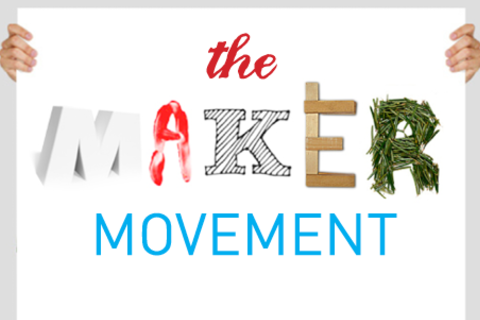
The topic of discussion this time round was the Maker Community. The Maker Movement was a movement that utilised Social Media to allow it's users to share things that they may have made or created with material around the house. Because of Social Media, communities were able to be formed that focused on these groups of people, and the amazing things that they were now making at home. It helped grow this community into an extremely large movement that started making meet up's in the real world, such as the Maker Faire, where people could meet and show others what they had created, or go and see others inventions. DIY culture flourished because of the use of Social Media. I personally enjoyed this topic, because I have found that I quite enjoy using my hands a lot, and this seemed like a fun thing to try in the future. So I wrote a blog about it and I feel like I did a rather impressive job here as well. I researched into this topic quite a lot because of how much I was interested in the topic. But once again, like the last topic, I still feel like I had a bit of trouble understanding what I was meant to talk about in my blog until I had properly written half of the blog. This may have brought the blog post down itself, but I feel that I made a good attempt at it all the same.
Gamification Experience
The Gamification Experience was probably the most exciting thing I've done in the 3 and a half years of university(ok that's a little bit of an exaggeration, but you get the point). This involved me completing tasks or even creating our own tasks for the other students to complete even. Some of the tasks even helped with this particular critical analysis, by providing us with opportunities to go back through the semester and review what we had learned. I enjoyed the activities immensely. Not to mention that it would add to my marks in a small way in the end as well. And it allowed me to learn a lot about Gamification as well and how it has progressed through the ages. I would definitely make sure to keep this activity in future classes. Forever. Never remove it. I mean it.
 |
| Some of the tasks I completed during the Gamification Experience |
Learning Outcomes
I believe I've developed skills during this semester that have allowed me to accomplish the learning outcomes goals. I've been able to convey my analytical and critical thinking skills as well as how I assess and critically reflect on social technologies and their applications through my blog posts throughout the semester. Though I do admit that I did have a slow start, as can be seen in the earlier blogs. But isn't that just part of the learning process? Trying hard until you finally succeed? Assignment 1, which involved my poster displaying my Persona and Identity Map, also provided a good example of how I assessed and critically reflected on social technologies.
I feel like I have managed to convey my broad knowledge and of issues and topics related to social technologies through the conversation that I conducted on my blog posts with other users. I also managed to convey this through my actual blog posts content as well.
I also was able to apply my verbal, written and visual communication through interacting with the class, both online in the Google Plus community, and in person during the workshops.
My Strengths & Weaknesses
I think one of my weaknesses is that I don't actually trust my own opinion, and when it came to discussing topics with my opinion clearly stated throughout it, I had a lot of trouble with it. I do believe I have improved on this one weakness as I progressed throughout the semester, but I still believe that I could improve a lot more.
A strength I found was that I always had a sound blog structure that I managed to follow each week. Though in the beginning I didn't put in titles for each section, I eventually got a hang of this particular technique. But the blogs were still being broken up in a certain structure that I knew was there.
Another weakness of mine would be how I researched some topics well and then other topics weren't researched as thoroughly. This is of course due to how interested I was in each topic. If I had to go back and change something, this would be on the top 5 list (though if I could go back in time, I don't think I'd be thinking about blogging, and more about giving myself advice and tips for the future).
My favourite part about blogging for some reason was creating the titles. This is a strength of mine, because I managed to come up with an interesting title for almost every week (I'm not so boastful that I would just assume all the titles I made were amazing). My personal favourite would have to be A Hitchhikers Guide to an Online Community. But the actual post itself for this one definitely needed some work done on it, I see that now. But come on. You have to agree that if you read that title, you would definitely click the link. So that's one more point I can add to my skills.
Key Take Away
This subject has actually divulged a lot of information that I didn't know about before I started, and that I didn't expect to learn either. One such thing that I discovered was how Social Technology could be used for more then just socialising, going as far as even helping to save lives. I found out about this particular way that social media could be used during week 6, Crisis and Disaster, and it is probably my biggest take away from this class.
Another take away for me would have to be how communicating with the community that you're apart of can be an extremely effective way to make something that was already good to begin with become even more amazing. When everyone gets involved, it just gets that much more impressive. An example of that would be how people used Crowdsourcing to find and apprehend people who planted a bomb or committed crimes. The possibilities of Social Media's application to real life events could be endless.
To Conclude The Story
The use of social media has outgrown the expectation that people originally had for it. Social Media can reach millions of people around the world, many more then if trying to reach people through face to face interactions. Social Media can help change peoples lives, and those people could live halfway around the world from the original poster/creator. So though I have learnt a lot of things during this semester, I'd have to say the one thing that I truly understand now, is that theres still a lot to learn about Social Media and how it can benefit society. We've just scraped the surface.
This is Brian Fernandez.
Signing Out.